"...Amikor a háztetőn a hajnal
macskamódra, lustán lépeget,
emlegetnek tűnődő szavakkal
vízimanók, dúdoló szelek.
Kéklő esték azt suttogják rólad:
álom voltál, elhaló zene.
De tudom - aki formálta vállad,
fénylő titkoknak volt nagy mestere.
Bokraink közt az ősz barangol,
kóró lett a fényes laboda.
Zizegő, szép zabkéve-hajadról
nem álmodom többé már soha."
A következő címkéjű bejegyzések mutatása: Versek. Összes bejegyzés megjelenítése
A következő címkéjű bejegyzések mutatása: Versek. Összes bejegyzés megjelenítése
2008. december 12.

2008. szeptember 11.
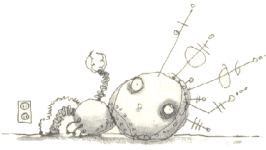
Tim Burton: Robot Boy
Mr. and Mrs. Smith had a wonderful life.
They were a normal, happy husband and wife.
One day they got news that made Mr. Smith glad.
Mrs. Smith would would be a mom
which would make him the dad!
But something was wrong with their bundle of joy.
It wasn't human at all,
it was a robot boy!
He wasn't warm and cuddly
and he didn't have skin.
Instead there was a cold, thin layer of tin.
There were wires and tubes sticking out of his head.
He just lay there and stared,
not living or dead.
The only time he seemed alive at all
was with a long extension cord
plugged into the wall.
Mr. Smith yelled at the doctor,
"What have you done to my boy?
He's not flesh and blood,
he's aluminum alloy!"
The doctor said gently,
"What I'm going to say
will sound pretty wild.
But you're not the father
of this strange looking child.
You see, there still is some question
about the child's gender,
but we think that its father
is a microwave blender."
The Smith's lives were now filled
with misery and strife.
Mrs. Smith hated her husband,
and he hated his wife.
He never forgave her unholy alliance:
a sexual encounter
with a kitchen appliance.
And Robot Boy
grew to be a young man.
Though he was often mistaken
for a garbage can.
2006. október 8.
Szösszenetek II.
Minden dal egy ima, ha szívből énekled,
és minden ember - aki szívből énekel - pap.
Sok emberen keresztül válunk olyanokká, amilyenek vagyunk.
Minden ember egy kis csavarás, egy kis változást hoz.
Még az is, aki csak rádmosolygott tegnap a közértben.
2006. augusztus 8.
Poem of Barcelona
Few years ago when I spent a month in Barcelona, I used to see this poem in the passage of the underground from the L3 to the L4 at the Passeig de Grácia.
I don't know that it's still there or not, but I liked it very much. On each timber one line.
Here it is:
No sólo
en tus
labios
estaba
la razón
para
besarte,
ni en tu piel
el reclamo
para mis
caricias.
No sólo
estaba
en tus ojos
ni en tus
nuca,
la razón
de la
calidez
que yo
otoraba
A mis
palabras.
No sólo
estaba en
*ti*
el encanto
y la tenura.
No sólo
de ti
dependía
que mi corazón
vibrara,
o que mis pulmones
se abrasaran
y no dudes
de mi
si te digo
que separados
por mil leguas
o viente
contra
vientre
viviría
y anoraría
lo mismo
no me
preguntes
si quiero
que
te marches
o
te quedes,
porque
conviertes
mis
emociones
en una
paradoja
porque
si no
son
*tus labios*
ni tus
ojos,
ni tus
manos ...
ni de
ti sólo
bra?as
depende
el encanto
y la ternura ...
qué más da
al fin
si mueres
naces
brallan
o triunfan
si envejeces,
si pereces
si caducas
si te
lastimias
o te encargas.
?Qué más
da al
fin
isi
tú no
eras
la razón
para
besarte
ni
la razón
para ...
querente?
...
fin
If anybody knows the writer of these lines, please, give him a warm thanks for the joyful crossing!
Gátak és világok ...
Az én világom csupa gát.
Sorompók veszik körbe, hogy ne férjenek hozzám közel, de valójában itt - a gátak között - ülök a világ közepén, ami telis-tele van zöldelő fákkal, bokrokkal, virágokkal és mosollyal.
Lehet, hogy a Ti világotok is csupa gát, de legbelül biztosan vannak zöld rétek, fák és virágok!
Feliratkozás:
Bejegyzések (Atom)
